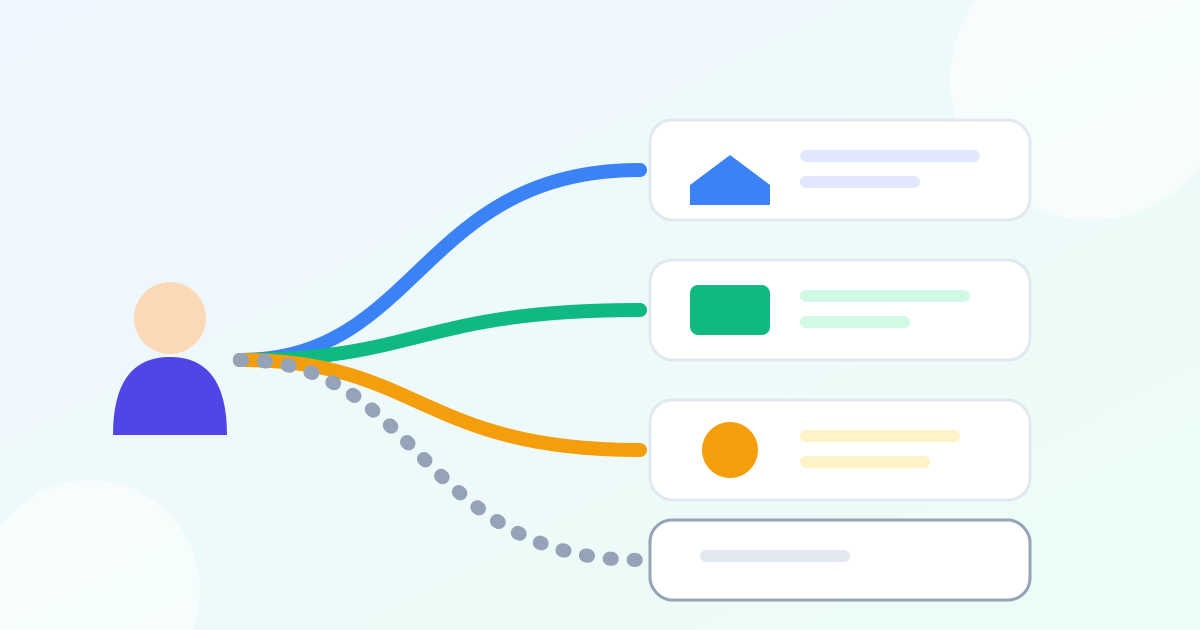

In most Dubai schools, students of determination have a detailed plan for their learning and a much thinner one for their future. The inclusion team knows the student's needs in depth; the careers team knows pathways and applications; and the two meet, if at all, in Grade 12 when a university application needs access arrangements.
FutuReady's Standard 9, Youth-Centred and Inclusive Guidance, is built to close that gap. It asks for guidance that is equitable and accessible for every student, especially those of determination; a multidisciplinary team that identifies needs early; personalised plans; and mentors and role models who share or understand students' experiences. With inclusive education named as one of KHDA's four inspection focus areas this year, it is also the standard where FutuReady and inspection overlap most directly. In the last full inspection cycle, 2023-24, 76 percent of Dubai private schools were rated Good or better for inclusive education.
What Standard 9 asks for
The standard's three indicators:
The practices go further: a school-wide policy guaranteeing inclusive guidance; personalised support plans for all students, with a special focus on those needing additional support, reviewed with students, parents and advisors; professional development in inclusive practice for everyone who gives guidance; and data on participation and destinations analysed for equity.
The context Dubai schools already work in
Standard 9 sits on top of an existing policy. The Dubai Inclusive Education Policy Framework, published in 2017, set out how private schools should become fully inclusive. As reported at the time, it barred schools from refusing admission to students with special educational needs and disabilities, required an inclusion support team in every school, and set minimum ratios of support teachers and learning support assistants to students.
That means most schools already have the people Standard 9 asks for. What they often lack is the career dimension in the inclusion team's work, and the inclusion dimension in the careers team's work.
One plan, not two
The simplest structural change is to make career aspirations and next steps a standing section of every student of determination's existing support plan, from Grade 6 at the latest. The framework's practices describe exactly this: personalised plans addressing academic progress, personal growth and career aspirations, updated routinely with feedback from students, parents and advisors.
A career section in a support plan does not need to be long:
| Section | What to record | Who contributes |
|---|---|---|
| Interests and strengths | What the student enjoys and is good at, in their own words where possible | Student, family, tutor |
| Pathways being explored | Including vocational, supported employment and university routes | Counselor, student |
| Experiences planned | Visits, talks or shadowing, with the adjustments each needs | Counselor, inclusion lead |
| Adjustments for transition | Exam access arrangements, interview support, application formats, university disability services | Inclusion lead, counselor |
| Mentor or role model | Someone who shares or understands the student's experience | Counselor |
The inclusion team brings knowledge of the student; the counselor brings knowledge of pathways. Neither can write this section alone.
Making experiences accessible
Standard 5 asks for experiential learning for all students, and it is explicit about students of determination and those with diverse learning or socio-emotional needs: they should have full access, with differentiated resources, personalised accommodations and flexible formats such as virtual job shadowing or in-school simulations.
In practice, that means planning adjustments before an experience rather than excusing students from it:
Mentors who understand
Indicator 9.3 is the most distinctive part of the standard. Its practices suggest connecting students of determination with mentors, alumni or professionals who have faced similar experiences or challenges and can share how they navigated them.
Schools rarely have such a network ready-made. Practical starting points include alumni of the school's own inclusion programme, parents in the school community who are open about their own experience, and disability-led organisations and employers in the UAE. As with all adults working with students, the framework is clear that safeguarding procedures must be in place first.
Measuring equity, not just provision
Standard 9's practices ask schools to analyse data on participation, progress and destinations to monitor inclusion and equity outcomes. For counselors, three comparisons answer most of the question:
- Participation. Did students of determination take part in guidance sessions and experiences at the same rate as their peers?
- Planning. Did they have the same number of guidance conversations, and did their plans include a backup route?
- Destinations. Did they reach their intended destination at similar rates?
International evidence shows that who students are can shape their plans more than what they can do: the OECD's 2025 report on teenage career preparation found that social background predicts young people's ambitions more strongly than their academic ability. Equity data is how a school sees whether anything similar is happening to any group in its own cohort, and whether its guidance is narrowing the gap or widening it.
Frequently asked questions
Who should be on the multidisciplinary team for Standard 9?
The framework lists educators, guidance professionals, SEN staff, mental health professionals and other relevant specialists, with external experts where needed. In most schools this means extending the existing inclusion support team to include the counselor.
Do students of determination need a separate career plan?
The framework asks for personalised support plans that cover academic progress, personal growth and career aspirations. Adding a career section to the existing support plan meets that without creating a second document.
Is inclusion part of this year's inspections?
Yes. Inclusive education and the academic progress of students of determination are one of the four focus areas KHDA has named for this year's inspection visits.
What if a workplace cannot accommodate a student?
The framework suggests flexible formats such as virtual job shadowing or in-school simulations so that every student has full access to experiential learning. Choose partners who can accommodate, and plan an equivalent alternative where one cannot.
Sources
Every figure and requirement above comes from these documents. Where we interpret them, we say so.
- KHDA, FutuReady Framework for Schools, Standards 5 and 9 (2026)
- Government of Dubai, Dubai Inclusive Education Policy Framework (2017)
- Gulf News, Dubai private schools to be fully inclusive by 2020 (23 November 2017)
- Khaleej Times, KHDA outlines 4 key focus areas for Dubai school inspections this year (9 October 2026)
- Khaleej Times, KHDA inspection changes for Dubai private schools: what to expect in 2026-27 (28 September 2026)
- OECD, The State of Global Teenage Career Preparation (2025), summary by the Career Industry Council of Australia
Pave runs FutuReady from KG to Grade 12, and shows what your school can evidence today.
231 sessions mapped to all nine standards, one portfolio per student, and a leadership view that names the gaps instead of hiding them.